
Prostate artery embolisation (PAE) is a minimally invasive, image-guided procedure used to treat benign prostatic hyperplasia (BPH), a common condition where the prostate becomes enlarged and causes urinary symptoms. These may include frequent urination, weak urine flow, difficulty starting or stopping urination, and disrupted sleep due to nighttime symptoms.
Prostate artery embolisation (PAE) is a minimally invasive, image-guided procedure used to treat benign prostatic hyperplasia (BPH), a common condition where the prostate becomes enlarged and causes urinary symptoms. These may include frequent urination, weak urine flow, difficulty starting or stopping urination, and disrupted sleep due to nighttime symptoms.
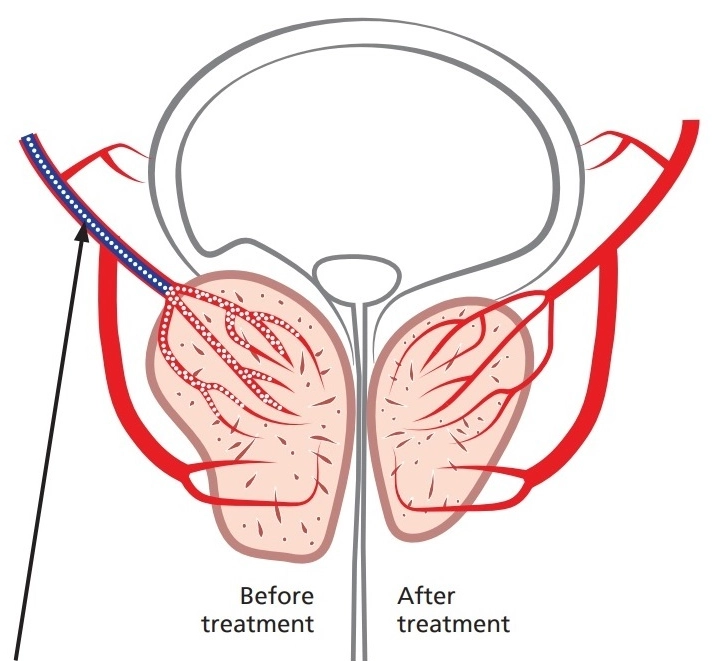
During the procedure, an interventional radiologist uses advanced imaging to guide a small catheter through a blood vessel—typically from the wrist or groin—to the arteries supplying the prostate. Tiny particles are then delivered to reduce blood flow to the enlarged prostate tissue, causing it to shrink over time and relieve pressure on the urinary tract.
Because PAE is performed without open surgery, it is typically done as a day procedure with a shorter recovery time. Many patients experience gradual improvement in symptoms over the weeks following treatment.
During the procedure, a small catheter is guided into the arteries supplying the prostate using medical imaging. Tiny particles are injected to reduce blood flow to the enlarged prostate tissue, helping relieve urinary symptoms.
PAE is a minimally invasive, non-surgical option for managing urinary symptoms caused by an enlarged prostate, and for some people it can be an alternative to traditional surgery. Whether it’s the right choice depends on your individual circumstances, so it’s important to consult a specialist to discuss what’s most suitable for you.
PAE may suit people with an enlarged prostate whose urinary symptoms haven’t improved with medication, or who want to avoid or aren’t suited to traditional surgery.
Suitability still varies from person to person, so a specialist assessment is needed to determine whether it’s appropriate for you.
PAE is usually performed as a day procedure, with most people returning home the same day and resuming normal activities within a few days. Some mild discomfort or urinary symptoms can occur early in recovery, and your interventional radiologist will guide you through what to expect.
The procedure generally takes around one to a few hours, depending on individual anatomy. It’s typically done under local anaesthetic with sedation, so you remain comfortable throughout.
Performed through a small catheter without the need for surgical incisions.
Most patients return to normal activities sooner compared with surgical procedures.
Targets the prostate while minimising impact on nearby tissues.
Typically performed without the need for an overnight hospital stay.
Helps improve urinary symptoms associated with BPH without traditional surgical intervention.
Prostate artery embolisation offers a modern, targeted approach to treating BPH without traditional surgery. Our interventional radiology team provides precise, image-guided care tailored to each patient’s condition.
Book a consultation with Interventional Radiology Associates to learn whether prostate artery embolisation may be the right treatment for you.