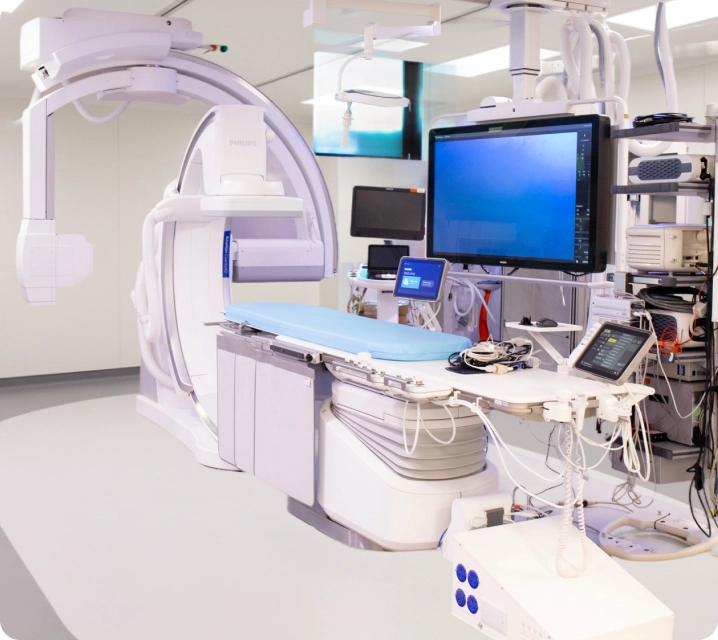
A Port-a-Cath is a small implantable device placed beneath the skin that provides long-term access to a vein. It allows medications, fluids, or blood samples to be delivered safely and efficiently through a single access point during ongoing treatment.
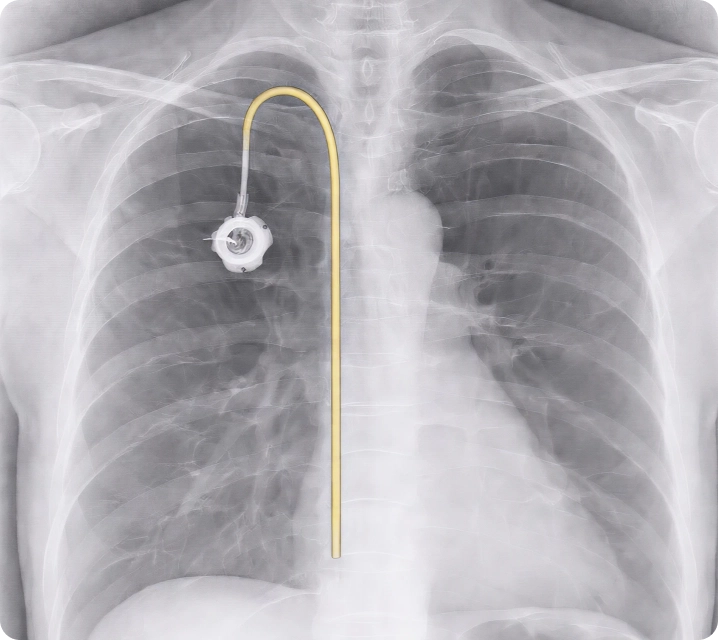
Port-a-Cath insertion is a minimally invasive procedure used to place a small medical device under the skin that provides reliable access to a vein for repeated medical treatments. It is commonly used for patients who require long-term therapies such as chemotherapy, intravenous medications, blood transfusions, or regular blood tests.
The device, also called an implantable port, consists of a small chamber placed beneath the skin and connected to a thin catheter that leads into a large vein. Interventional radiologists use advanced imaging guidance to position the catheter accurately, helping ensure safe placement and optimal function.
Once in place, the port allows healthcare providers to deliver medications or draw blood through a small needle inserted into the port, avoiding repeated needle sticks in the arms and making ongoing treatment more comfortable for patients.
A Port-a-Cath is commonly used for patients who require frequent or ongoing intravenous treatment. It helps reduce the need for repeated needle insertions and can make treatment more comfortable and convenient.
The procedure is performed by an interventional radiologist using image guidance, usually under local anaesthetic with sedation. A small device is placed just under the skin, often near the collarbone, and connected to a vein by a thin tube, so it sits neatly beneath the surface once healed.
Because it’s done under local anaesthetic, you shouldn’t feel pain during the procedure, though you may notice some pressure. Mild tenderness or soreness around the area afterward is normal and usually settles within a few days.
The insertion itself is generally quick, often taking around 30 to 60 minutes. It’s usually done as a day procedure, so most people are able to go home the same day.
However, your specialist may be able to guide you better about how long the treatment will take before it starts.
Most people return home the same day and resume normal activities within a day or two, with some mild tenderness or bruising around the site to begin with. It’s best to avoid heavy lifting or strenuous activity for a short time while the area heals.
The port provides a dependable way to deliver medications or draw blood over an extended period.
It reduces the need for repeated needle insertions in peripheral veins.
The device sits under the skin, making it discreet and allowing patients to continue normal daily activities.
Interventional radiologists use imaging technology to ensure precise positioning of the catheter.
Port-a-Cath devices are commonly used for therapies requiring regular or long-term intravenous access.
Port-a-Cath insertion is performed by interventional radiology specialists using advanced imaging techniques to ensure safe and accurate placement.
Book a consultation with Interventional Radiology Associates to learn more about Port-a-Cath insertion.