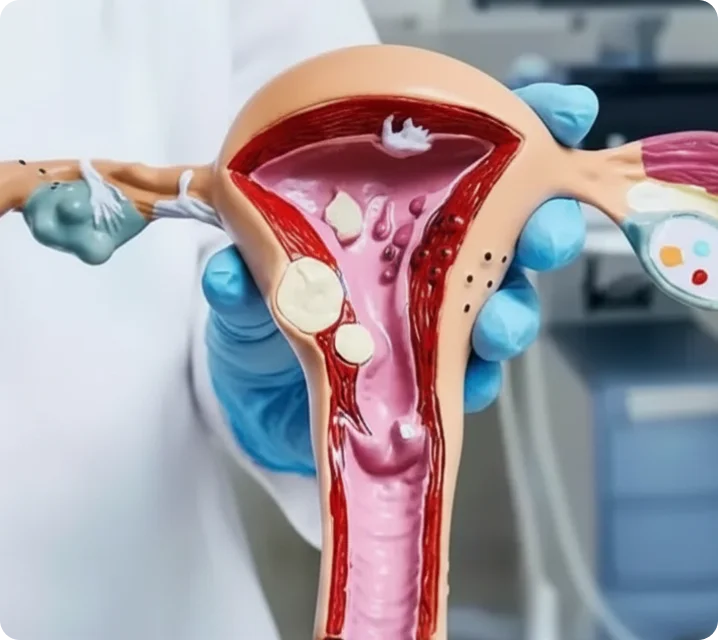
Uterine artery embolisation is a non-surgical procedure that treats fibroids and adenomyosis by blocking the blood vessels that supply them. By reducing blood flow, the affected tissue shrinks, which can help relieve symptoms such as heavy bleeding, pelvic pressure, and pain.
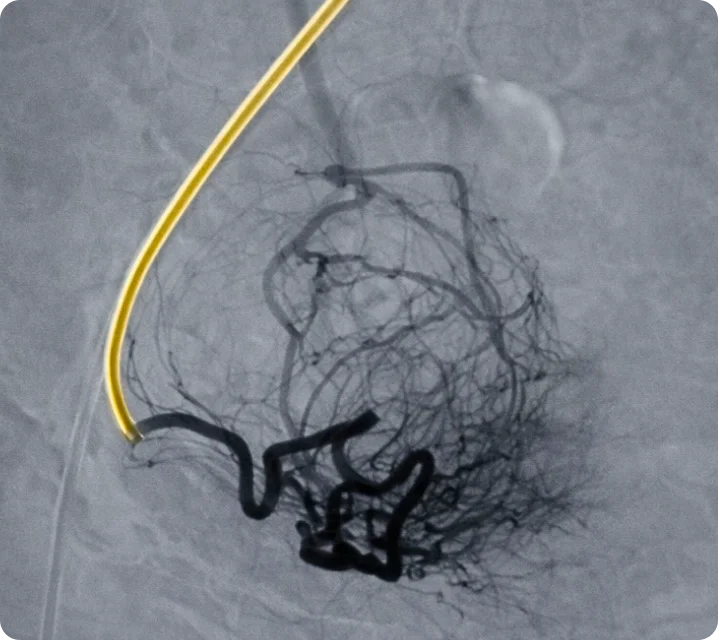
Uterine artery embolisation (UAE) is a minimally invasive procedure used to treat uterine fibroids and adenomyosis: two common conditions that can cause heavy menstrual bleeding, pelvic pain, pressure, and other disruptive symptoms. Instead of removing the uterus or performing major surgery, this treatment works by reducing the blood supply to the affected tissue, helping shrink fibroids and improve symptoms over time.
Performed by an interventional radiologist, uterine artery embolisation uses advanced imaging to guide a small catheter through a blood vessel, typically from the wrist or groin, to the arteries supplying the uterus. Tiny particles are then delivered to block the blood flow feeding fibroids or adenomyosis, allowing the tissue to gradually shrink while preserving the uterus.
Because the procedure is image-guided and minimally invasive, many patients experience shorter recovery times and can return to normal activities sooner compared with traditional surgical treatments.
Uterine Artery Embolisation (UAE) is commonly used to treat symptomatic uterine fibroids and adenomyosis. It may help reduce symptoms such as heavy menstrual bleeding, pelvic pain, pressure, bloating, and frequent urination caused by enlarged fibroids.
Using image guidance, an interventional radiologist passes a thin catheter through a small puncture in the wrist or groin to the arteries supplying the fibroids, then releases tiny particles to block their blood supply. This causes the fibroids to shrink over time and is usually performed under local anaesthetic with sedation, without a surgical incision.
Most patients stay in hospital for a short period, often overnight, and manage some cramping with pain relief in the first few days. Many return to their normal routine within one to two weeks, though recovery varies for every patient. Your interventional radiologist will guide you based on your circumstances.
As with any procedure, UAE carries some risks, including cramping, nausea, mild fever, or tiredness in the days afterward, and less commonly infection or effects on ovarian function or fertility.
Your interventional radiologist will discuss the potential risks and benefits with you during your consultation, so you can make an informed decision.
Many people notice improvement in symptoms such as heavy bleeding within the first few menstrual cycles, while pressure and bloating often ease more gradually over several months as the fibroids shrink.
The timing varies from person to person, and your specialist can give you a clearer idea of what to expect for your case.
The procedure is performed through a small catheter instead of an open surgery.
UAE treats fibroids and adenomyosis without removing the uterus.
Many patients return to normal activities sooner compared with surgical procedures.
Reducing blood flow to the affected tissue helps improve symptoms such as heavy bleeding and pelvic discomfort.
Advanced imaging allows the interventional radiologist to treat the affected area with high accuracy.
If you have been diagnosed with fibroids or adenomyosis and are exploring treatment options, uterine artery embolisation may be a suitable alternative to surgery. Our team at Interventional Radiology Associates can provide expert assessment and personalised care.
Book a consultation with Interventional Radiology Associates today to learn whether uterine artery embolisation may be right for you.